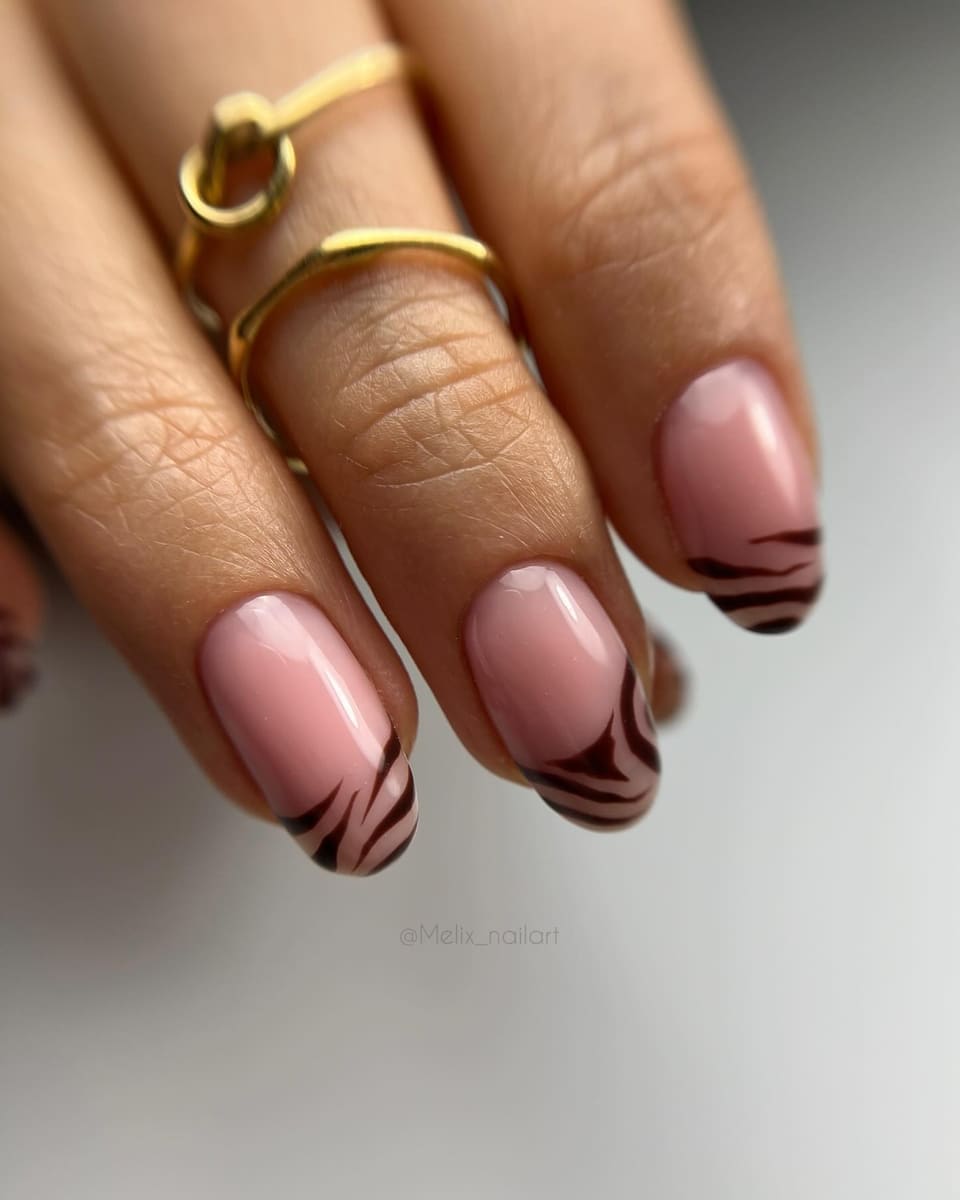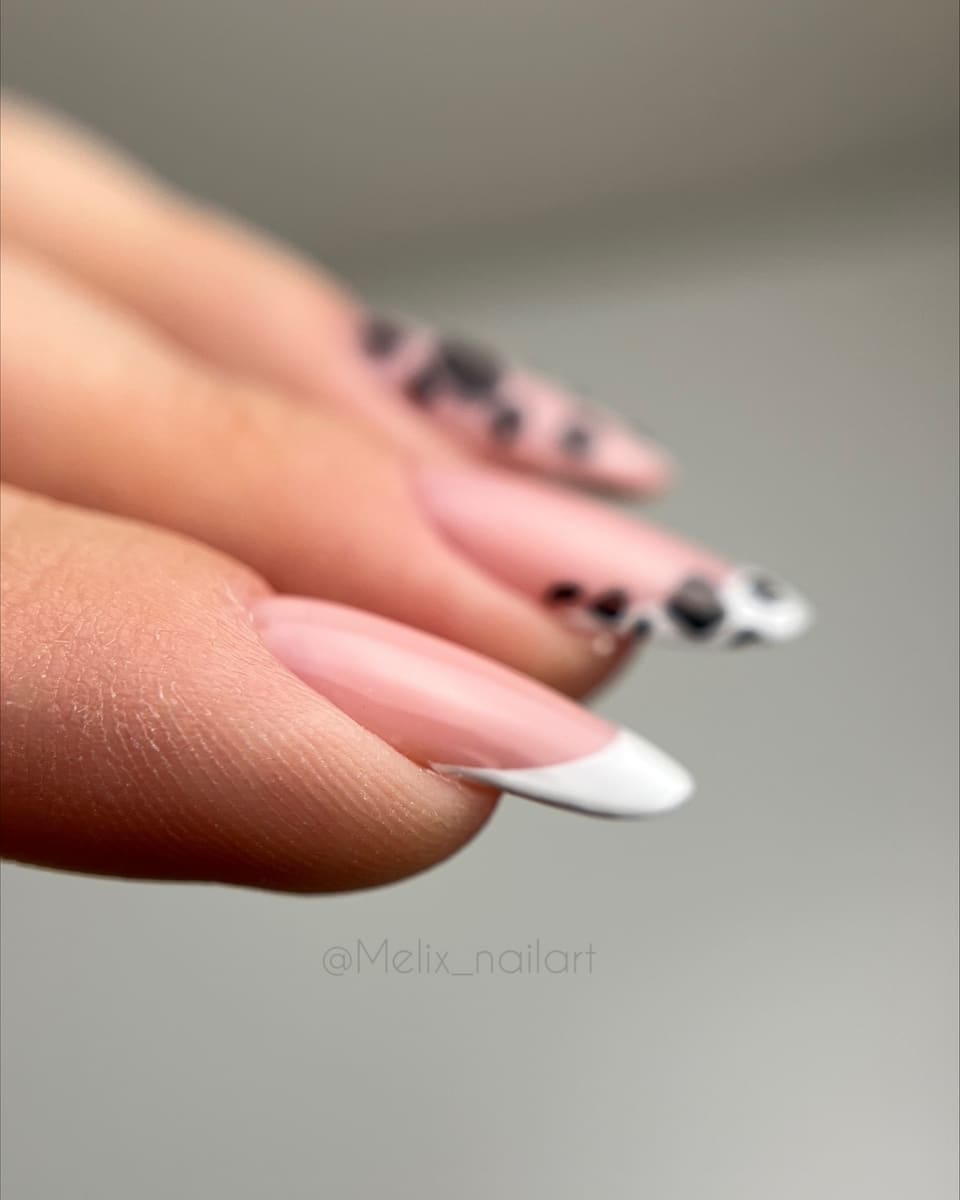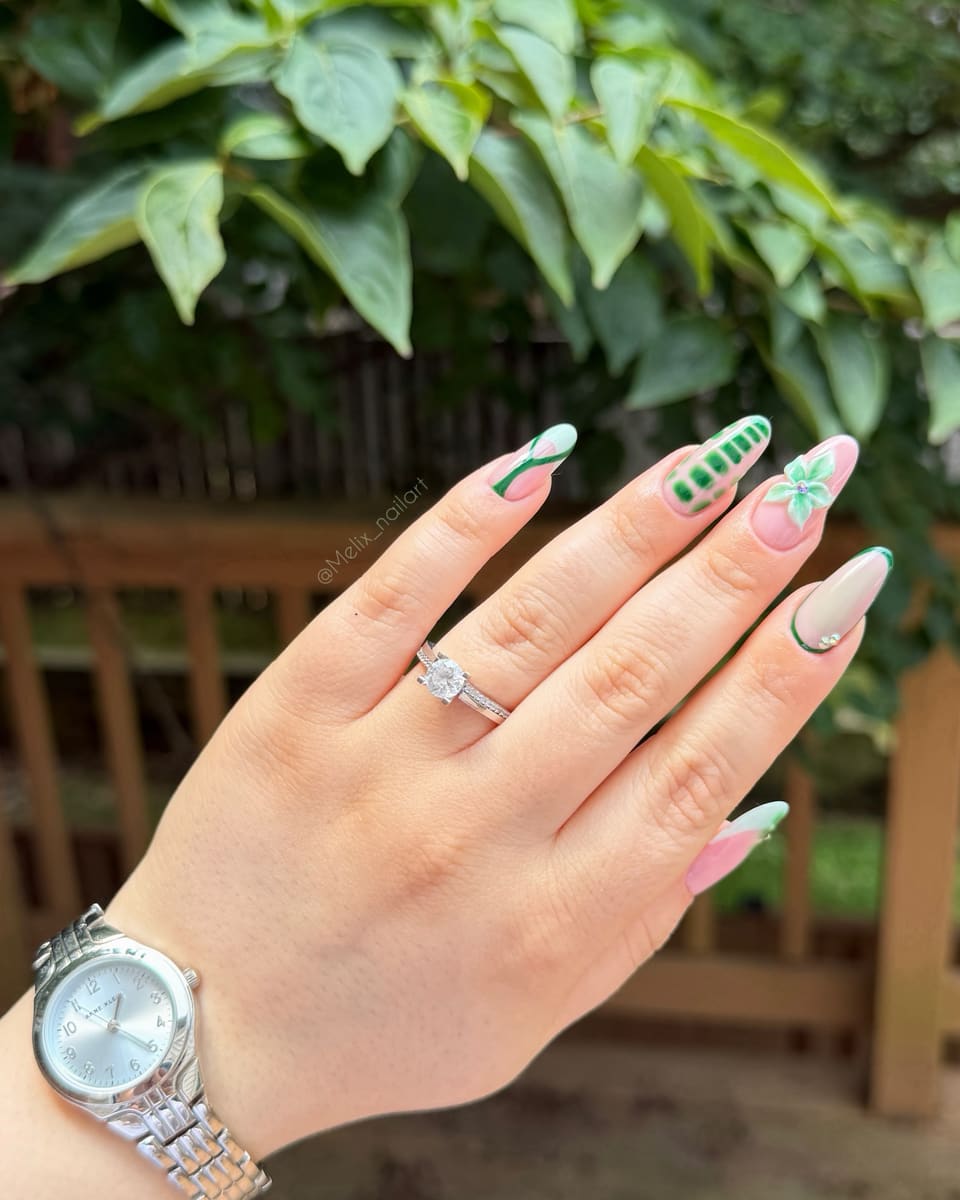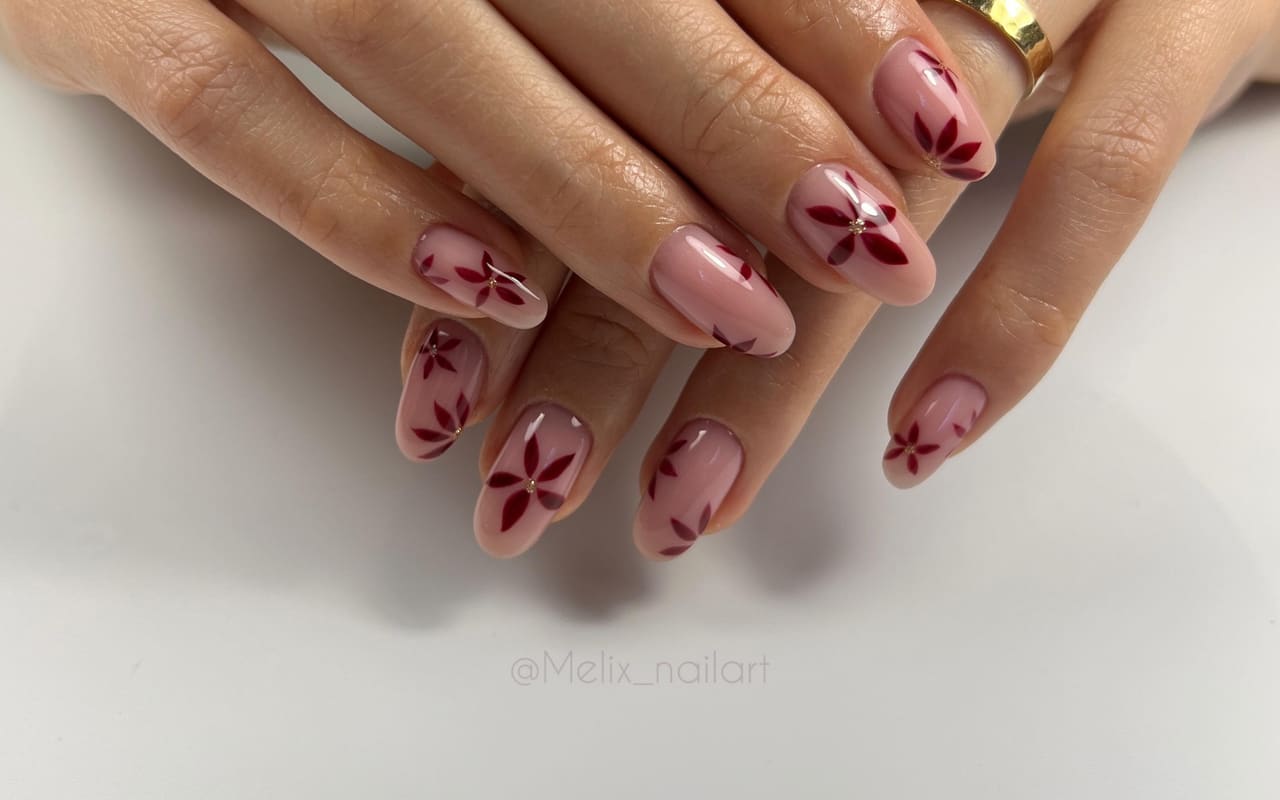
If you have scrolled past a close-up of a manicure and wondered why the color seems to start right at the skin, with no pale gap and no ragged edge, you have probably seen a Russian manicure. The name describes a way of preparing the nail rather than a product. It has become a popular request in recent years, and also a debated one, because it involves an electric file working close to the cuticle.
This article explains what the technique is, how it compares with a regular gel manicure, why some dermatologists advise against it, and how to tell whether the person doing yours knows what they are doing.
What a Russian manicure is
A Russian manicure is a dry manicure done with an electric file (an e-file) and a set of small bits. Instead of soaking the hands to soften the skin and then trimming around the nail with nippers, the technician works on dry skin. They lift the thin layer of cuticle that grows onto the nail plate, clear it away with fine rotating bits, and tidy the rim of the nail fold. You will also see it called an e-file manicure, a dry manicure, a waterless manicure, a combined manicure or a European manicure.
The goal is a very clean, even outline around each nail. Gel color can then be applied right up to that outline, which is what gives the finish its crisp look, and why the regrowth looks tidy for longer.
How it is done, step by step
- Consultation. Shape, length, color, and a look at the nails and skin for anything that means waiting.
- Tools. In a careful studio, metal tools and bits come out of a sealed, sterilized pouch.
- Removal and shaping. Old gel is filed down carefully, and the nails are shaped.
- Opening the pocket. The cuticle is gently lifted so the space between the skin and the nail plate can be reached.
- Cuticle work. A fine bit, often flame or needle shaped, runs at a shallow angle along the nail plate to lift and clear the non-living tissue stuck to it. A small ball-shaped bit then smooths the lifted rim. Some technicians trim lifted tissue with nippers at this stage.
- Prep. The nail surface is cleaned so the product bonds.
- Base, color and top coat. Often with a structured gel layer for strength, then color applied close to the cuticle line.
- Finish. Cuticle oil and aftercare.
A Russian manicure usually takes longer than a standard salon manicure, often an hour to an hour and three quarters, because each finger gets focused work.
Russian manicure vs. regular gel manicure
Both can end in the same gel color. The difference is underneath.
| Compared | Russian (e-file) manicure | Regular gel manicure |
|---|---|---|
| Skin prep | Dry, with an electric file | Often soaked, then pushed and trimmed |
| Cuticle | Non-living cuticle lifted off the nail plate | Pushed back; loose skin clipped |
| Color placement | Close to the nail fold | Often a small gap left at the cuticle |
| Grow-out | A neat line that stays tidy | Regrowth tends to show sooner |
| Time | About 60 to 105 minutes | Often 45 to 60 minutes |
| Depends most on | The technician’s control of the file | The technician’s care with nippers |
Does it last longer? The technique’s supporters say yes: with the tissue cleared, gel bonds right at the fold, leaving less edge to lift. That is a trade explanation, not a research finding. We found no clinical study comparing how long the two last.
What dermatologists say about cuticles
The American Academy of Dermatology (AAD) is clear that the cuticle has a job. Its manicure and pedicure safety guidance advises people to “never cut or forcefully push back your cuticles,” its healthy-nail tips say not to “remove the cuticle,” and its advice on artificial nails suggests asking the technician to skip cuticle trimming, because trimmed cuticles let germs in. The American Podiatric Medical Association gives the same advice for pedicures: cuticles are a barrier against bacteria, and cutting them raises the risk of infection. A 2012 review in the Indian Journal of Dermatology, Venereology and Leprology explains the anatomy: the cuticle seals the small space under the fold of skin at the base of the nail.
That advice is the right place to start any honest conversation about Russian manicures.
Why some dermatologists advise against it
Some go further than general cuticle advice and recommend against the technique itself.
- A published case. In 2022, dermatologists at the University of Pennsylvania reported a patient who developed acute paronychia (a painful infection of the nail fold) and nail shedding after a Russian manicure. They described the technique as aggressive and wrote that it was being presented to the public, inaccurately, as safe. In their view, removing the cuticle so completely left the nail fold exposed.
- A dermatologist’s warning. In September 2025, Yale dermatologist Dr. Mona Gohara told TODAY that she advises against Russian manicures because they involve cutting the cuticle, and she warned about paronychia.
Supporters of the technique answer with a distinction. The true cuticle is a thin, non-living layer that sticks to the nail plate as the nail grows. The eponychium, often called the cuticle in everyday speech, is the living fold of skin at the base of the nail. A careful Russian manicure clears the first and aims to leave the second intact.
Both views are worth taking seriously. The anatomy is real, and so is the critics’ point that the boundary is fine and hard to honor with a rotating bit. One case report doesn’t show how often problems happen, but it does show what happens when they do. The fair conclusion: this is a technique whose risk depends heavily on the operator, and no salon can promise that there is none. Be wary of one that tries.
The real risks, and how careful technicians reduce them
- Working into living skin. Filing too deep around the nail fold can cause soreness or small wounds, which are a way in for infection. A careful technician uses a fine bit at low speed and light pressure, and stops if something hurts. You shouldn’t bleed.
- “Rings of fire.” Red, half-moon grooves and thinning near the cuticle come from over-filing: too much pressure, the wrong speed for the bit, or repeated passes over the same spot.
- Heat. An e-file running too fast or held too long in one place heats the nail. You should never feel burning. Say so immediately if you do.
- Thinning at removal. In a study of 2,118 gel-polish users, far more reported nail changes after removal than while wearing the polish. Old product should be filed down carefully, never scraped or peeled away.
- Dirty tools. Tools that touch skin must be cleaned and disinfected between clients at a minimum. Virginia’s rules add that e-file bits are soaked in acetone and scrubbed with a wire brush. The most careful studios also sterilize metal tools and bits in an autoclave. Files and buffers can’t be disinfected, so they should be new for each client. Virginia’s nail salon consumer guide says tools that cannot be disinfected, “such as cotton pads and emery boards, must be thrown out immediately after being used once.”
- Allergy. This one isn’t about the file at all. Gel products contain acrylates such as HEMA, the leading nail allergen, and uncured gel touching the skin is the main route to becoming sensitized. Thin layers, full curing and a lamp suited to the gel all help. Gel nail allergy, explained covers the signs.
Who should skip it, or ask a doctor first
Wait until your skin has healed if you have an infection around a nail, an open cut, a sore hangnail, or a flare of eczema or psoriasis on your fingers. If you have diabetes, poor circulation, a bleeding disorder, or a condition your doctor has asked you to protect your hands or feet for, ask your doctor before any manicure that works near the cuticle, and tell the technician. A good technician will adapt the service, make the cuticle step gentler, or suggest waiting. If you have reacted to gel before, a dry manicure with no gel at all is still possible.
Five questions to ask any salon
- Are metal tools and e-file bits sterilized in an autoclave, and will I see them opened?
- Are files and buffers new for me?
- Will you leave the living skin around my nails intact?
- Which bits and speeds do you use near the cuticle?
- What happens if my skin is sensitive, or something feels uncomfortable?
A confident technician will answer all five without hesitating. In Virginia you can also check that a nail technician’s license is current on the Department of Professional and Occupational Regulation (DPOR) License Lookup.
Price and time in Northern Virginia
Expect a Russian manicure to take longer than a standard gel manicure: about an hour for the prep alone, and up to an hour and three quarters with gel color and a structured layer. The price reflects that time, along with the sterilization and the single-use files. What a Russian manicure costs, and why explains what you are paying for and how to judge value by the week rather than by the visit. At Melix, the options and times are listed on the Russian manicure page.
Aftercare that makes it last
- Use cuticle oil once or twice a day. It moisturizes the nails and the skin around them, and many nail professionals find it keeps gel less brittle.
- Wear gloves for cleaning and dishes.
- Treat your nails as jewelry, not tools.
- Never peel or pick gel off. It takes layers of the natural nail with it.
- If anything lifts, book a repair rather than gluing it. Water trapped under lifted gel is how a green bacterial discoloration can start.
- Book your next appointment at three to four weeks, before the regrowth becomes a weak point.
The bottom line
A Russian manicure is a technique, not a guarantee. In careful hands it gives a very clean finish that grows out neatly. In rushed hands it is a drill near your skin, and some dermatologists would rather you skipped it altogether. Choose the technician, not the name of the service: ask about sterilization, watch how the tools are handled, and speak up if anything hurts.
At Melix, Melina works one-on-one, opens sterilized tools at your seat, and adapts the cuticle step to your skin, or skips it if your skin isn’t ready. You can read more on the Russian manicure page and see how tools are cleaned on the hygiene page.
Sources
- American Academy of Dermatology: Manicure and pedicure safety
- American Academy of Dermatology: 11 dermatologists' tips for healthy nails
- American Academy of Dermatology: Artificial nails, reducing damage
- American Podiatric Medical Association: Pedicure pointers
- Milbar et al., case report (Skin Appendage Disorders, 2022)
- TODAY.com: Dr. Mona Gohara on Russian manicures (September 8, 2025)
- Madnani and Khan, Nail cosmetics (Indian Journal of Dermatology, Venereology and Leprology, 2012)
- Putek et al., study of 2,118 gel-polish users (Acta Dermato-Venereologica, 2020)
- Virginia DPOR: Nail salon consumer guide
- 18VAC41-20-270: Sanitation and safety standards (Virginia Administrative Code)