Russian manicure in Vienna & Tysons
A Russian manicure is a dry manicure done with an electric file. Melina lifts the non-living cuticle off the nail plate and tidies dry skin at the fold without cutting into living tissue, then sets gel color close to the skin, so the finish looks crisp up close and grows out neatly. Plan on 60 to 105 minutes.
- Time
- 60 to 105 minutes
- Lasts
- 3 to 4 weeks, typically
- Tools
- Sterilized, opened in front of you

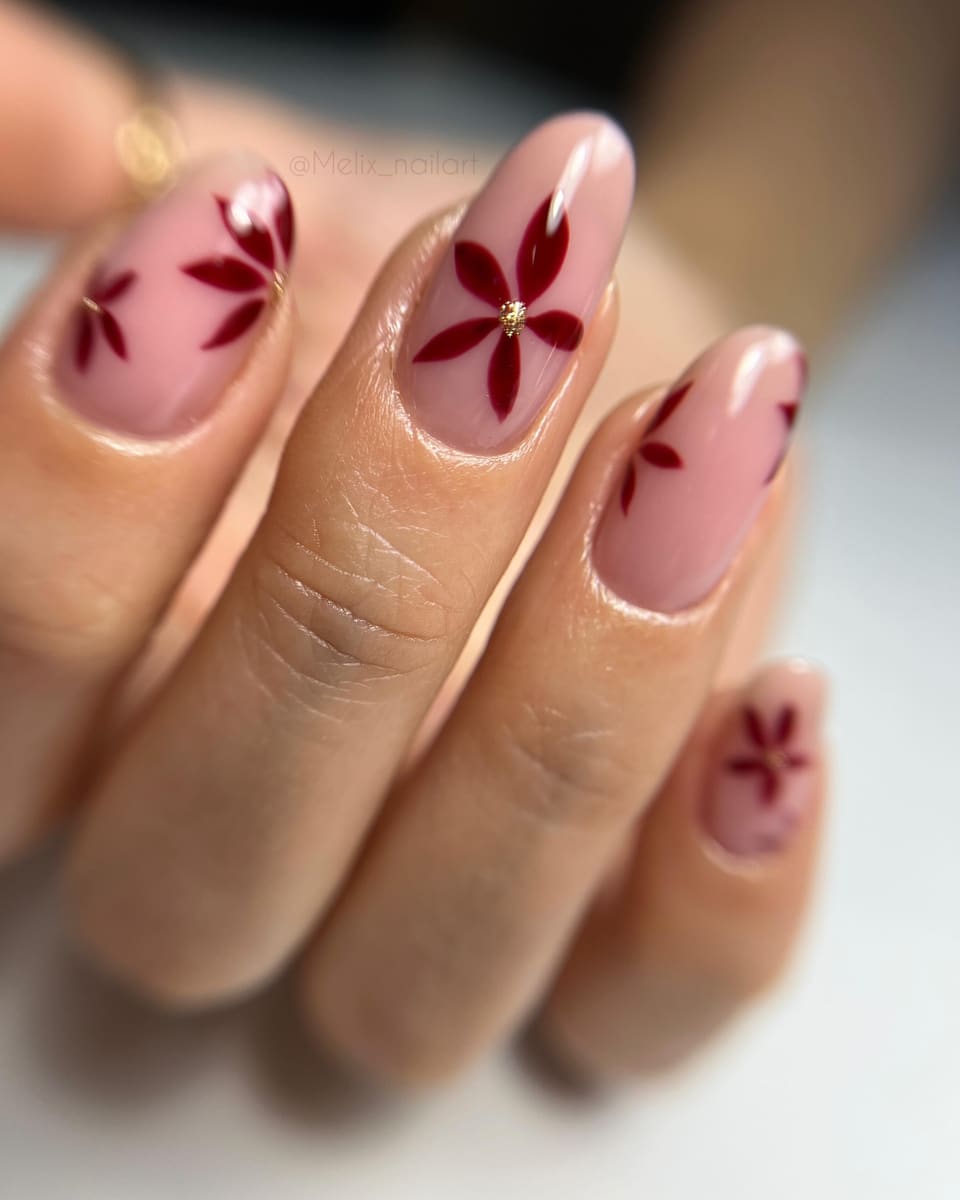
What a Russian manicure is
A Russian manicure is a way of preparing the nail, not a product. Instead of soaking your hands and trimming around each nail with nippers, Melina works on dry skin with an electric file (an e-file) and a set of very fine bits. She lifts the thin, non-living layer of cuticle that grows onto the nail plate, clears it away, and tidies loose, dry skin at the edge of the fold without cutting into living tissue. The line around each nail ends up smooth and even.
You will also see it called an e-file manicure, a dry manicure, a waterless manicure, a combined manicure or a European manicure. The names describe the same family of techniques, and the details vary from one technician to the next.
That prep is what you see in close-up photos. Gel color can sit right up against a clean nail fold, so there is no pale halo of bare nail around the edge. As your nails grow, the regrowth shows as a clean line rather than a ragged one, which is why a set can still look fresh in week three.
It is also a slower service than a standard salon manicure. Each hand gets focused time, and nothing is rushed to make room for the next client. Melina works in the Vienna and Tysons area, close to McLean and Oakton.
Russian manicure or regular gel manicure?
Both can end in the same gel color. The difference is the prep underneath, which is what you notice up close and in week three.
| Compared | Russian (e-file) manicure | Regular gel manicure |
|---|---|---|
| Prep | Dry, with an electric file and fine bits | Often soaked, cuticles pushed and trimmed with nippers |
| Cuticle line | Non-living cuticle lifted off the nail plate | Cuticle pushed back, loose skin clipped |
| Color placement | Close to the nail fold, no bare edge | A small gap is often left at the cuticle |
| Grow-out | A neat line that stays tidy for weeks | Regrowth tends to show sooner |
| Time | 60 to 105 minutes, one-on-one | Often 45 to 60 minutes |
| Depends most on | The technician’s control of the file | The technician’s care with nippers |
If you have only had soak-and-clip manicures, your first Russian manicure will feel slower and more detailed. That is the point.
Who it suits, and who should wait
- You want nails that look finished up close. Professionals who shake hands all day, and anyone who notices the cuticle line before the color.
- Your cuticles grow quickly or unevenly. Careful prep keeps them tidy for longer between visits.
- You love fine detail. Fine-line art, French tips and 3D flowers and bows look sharper on a well-prepped nail.
- You have an event coming. Weddings, holidays and photos, where the set has to look perfect a week later.
It isn’t for every hand on every day. If you have an infection around a nail, an open cut, or a flare of eczema or psoriasis on your fingers, wait until the skin has healed. If you have diabetes, poor circulation or a condition your doctor has asked you to protect your hands for, ask your doctor first and mention it in your request, so the service can be adapted or postponed.
How your appointment goes
- Consultation. You talk through shape, length and color, and Melina looks at your nails and skin before anything starts.
- Tools opened in front of you. Metal tools and e-file bits come out of a sealed, sterilized pouch that is opened at your seat. Your file and buffer are new.
- Removal and shaping. Old gel is filed down carefully, never peeled or pried, and your nails are shaped to suit your hands.
- Cuticle work. With a fine bit at low speed and light pressure, the non-living cuticle is lifted off the nail plate and the rim of the fold is tidied. Melina works to leave living skin intact.
- Prep. The nail surface is cleaned and dehydrated so the product bonds evenly.
- Base and color. A thin base goes on first, or builder gel if you chose structure, then color is placed close to the cuticle line, one thin coat at a time.
- Finish. Top coat, cuticle oil and a few minutes of aftercare advice.
Plan on about an hour for the natural finish and up to an hour and three quarters with structured gel. If you’re wearing gel or extensions from another salon, mention it when you book, so there is time to take them off gently.
Three ways to finish: gel color, builder gel or natural
There are three ways to finish, and you can switch between them from one visit to the next.
- Natural (Classic). The prep, shaping and oil, with no color. It suits anyone taking a break from gel, and anyone who reacts to gel products.
- Russian manicure with gel color. A long-wearing gel polish, from sheer milky nudes to deep burgundy, set close to the cuticle.
- Russian manicure with builder gel. A thin, structured layer of builder gel under the color. It adds rigidity and protects the free edge while your natural nails grow. The structured gel page explains when it helps.
Not sure which one you need? Start with gel color and ask. Melina will tell you honestly whether your nails would benefit from structure. Any finish can carry art, from a single accent nail to hand-sculpted pieces, and art is priced by level on the prices page.
Is a Russian manicure safe? What dermatologists say
There is a real debate here, and you deserve both sides of it.
The case for caution. The American Academy of Dermatology advises against cutting or forcefully pushing back cuticles, and suggests asking your technician to skip cuticle trimming, because trimmed cuticles let germs in. The American Podiatric Medical Association says the same about toes: cuticles are a barrier against bacteria, so don’t cut them. Anatomy explains why: the cuticle seals the small space under the fold of skin at the base of the nail. In 2022, dermatologists at the University of Pennsylvania published a case of a painful infection around the nails (acute paronychia) and nail shedding after a Russian manicure, and called the technique aggressive. In 2025, Yale dermatologist Dr. Mona Gohara told TODAY that she advises against Russian manicures because they involve cutting the cuticle.
The technique’s side of it. The word “cuticle” covers two different things. The true cuticle is a thin, non-living film that sticks to the nail plate as the nail grows. The eponychium is the living fold of skin at the base of the nail. A careful Russian manicure clears the first and aims to leave the second intact. Critics point out that the line between the two is fine, and that is fair: how close a technician works to it is exactly what separates careful work from harmful work.
The honest conclusion is that the risk depends on the person holding the file. These are the problems to know about:
- Infection when living skin is cut or filed open.
- Over-thinning, the red arcs and soreness near the cuticle known as “rings of fire”, from too much pressure, the wrong speed or too many passes.
- Heat from a bit held too long in one place or run too fast.
- Dirty tools, when bits and nippers are not properly cleaned between clients.
How Melina reduces each risk
- Tools. Metal tools and e-file bits are cleaned, sterilized in an autoclave and sealed in pouches that are opened in front of you. Virginia’s minimum is disinfection: bits must be soaked in acetone and scrubbed with a wire brush, and tools fully immersed in an EPA-registered disinfectant for at least ten minutes. Sterilization goes further. Files and buffers are new for every client.
- Technique. A fine bit at low speed and light pressure around the fold, kept moving so it never sits in one spot.
- Your natural nail. She files old product, not your nail, and never peels or pries gel away. Research on gel wearers found that most nail changes were reported after removal, so removal gets the most care.
- Your skin. If your skin is thin, sensitive or healing, the cuticle step is gentler or skipped, and she will tell you so. If anything stings or feels hot, she stops.
If you would rather avoid e-file cuticle work entirely, that is a reasonable choice, and Melina will say so. The full picture, with sources, is in Russian manicure, explained, and the cleaning steps are on the hygiene page.
Questions to ask any salon offering a Russian manicure
- Are metal tools and bits sterilized, and will I see them opened?
- Are files and buffers new for each client?
- Will you leave the living skin around my nail intact?
- Which bits and speeds do you use near the cuticle?
- What happens if something stings or feels hot?
A careful technician answers all five without hesitating. In Virginia, you can also check that a nail technician’s license is current on DPOR License Lookup.
Allergies and the lamp
Gel products contain acrylates, and the leading culprit in nail allergy is one called HEMA. A reaction often shows as itching, redness, swelling or small bumps around the nails and fingertips, and sometimes on the face or neck. The known risk factors include uncured gel touching the skin, under-cured layers and a lamp that doesn’t match the gel. That is why Melina works to keep product off your skin, applies thin layers and cures each one fully. If you have reacted before, book the natural finish and see a dermatologist, who can patch-test you. Gel nail allergy, explained goes further.
Curing lamps emit UVA. The studies so far put the added skin-cancer risk as small, and sunscreen lowers it further. Apply a broad-spectrum SPF 30+ before you come, or wear dark fingerless gloves during curing.
Russian manicure price in Vienna and Tysons
The price of a Russian manicure reflects time and care more than product: up to an hour and three quarters one-on-one, a sterilized tool kit for every client, new files and buffers, and a finish meant to last three to four weeks. The options panel on this page lists each finish with its time. Prices are shown there and on the price list as soon as they are published, and until then, Melina quotes before you book. Art is priced by level, never as a surprise at the end.
The longer a set wears well, the less each week of it costs you. What a Russian manicure costs, and why does that math and explains what separates a careful appointment from a quick one.
How long it lasts
Most Russian manicures with gel color look good for three to four weeks. How long yours lasts depends on how fast your nails grow, how you use your hands, and whether you chose builder gel. Fingernails grow about 3.5 millimeters a month, so you will notice the regrowth at the cuticle before anything else, and because the prep was clean, it grows out as a neat line rather than a ragged edge.
Aftercare
- Oil once or twice a day. It moisturizes the nails and the skin around them, which the American Academy of Dermatology recommends, and many nail professionals find it keeps gel less brittle.
- Gloves for cleaning and dishes. Water and harsh cleaners are hard on skin and nails.
- Nails as jewelry, not tools. Opening cans and scraping labels is how most chips start.
- No picking or peeling. Peeling gel takes layers of your natural nail with it. Book a removal instead.
- Lifting or a crack? Message Melina with a photo and book a repair. Don’t glue it.
Book your Russian manicure
Choose your finish, tell Melina which days work for you, and add a photo if you have one in mind. She confirms the time personally and answers any questions before your appointment. Coming from McLean, Oakton or farther? The Tysons page covers the drive.
Sets that started with a Russian manicure
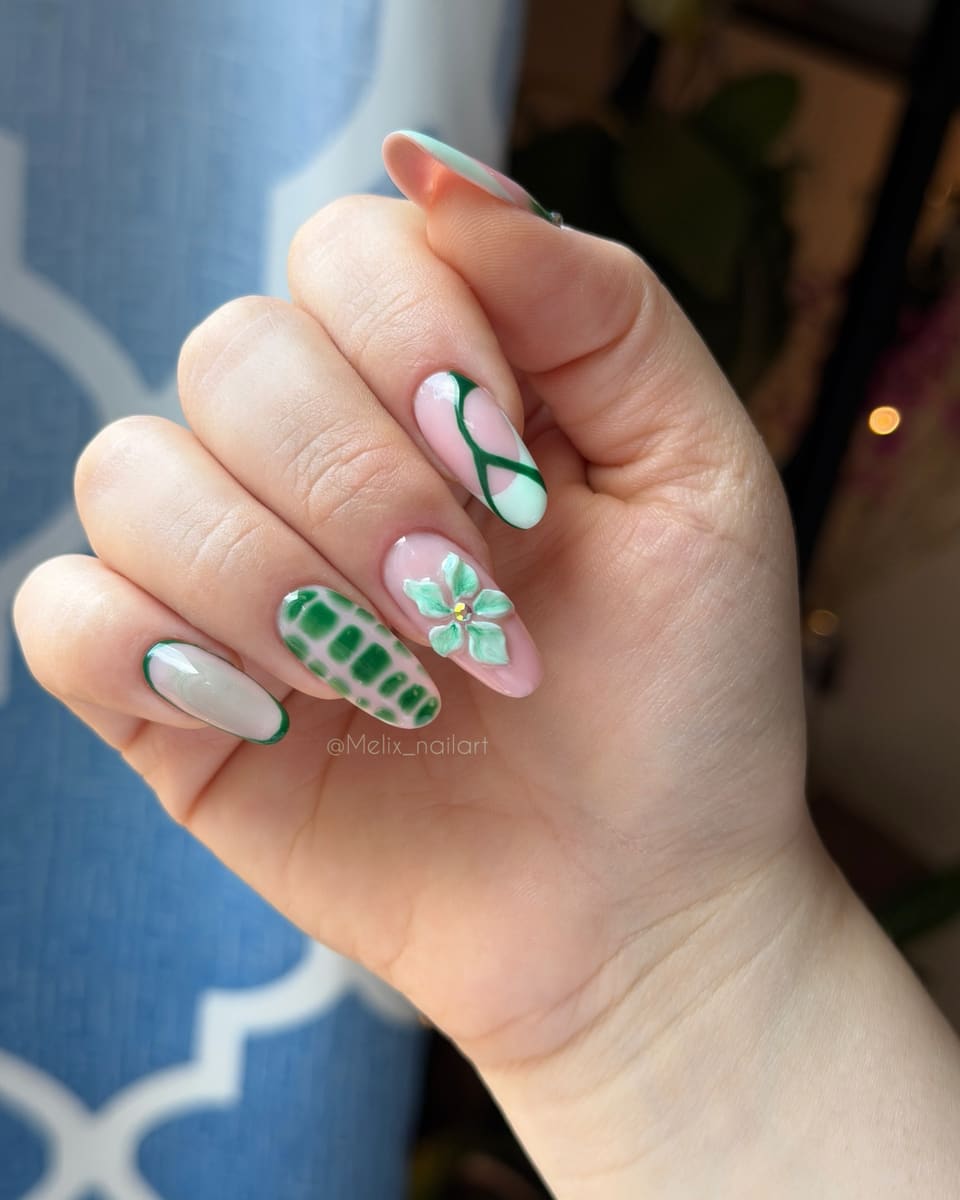
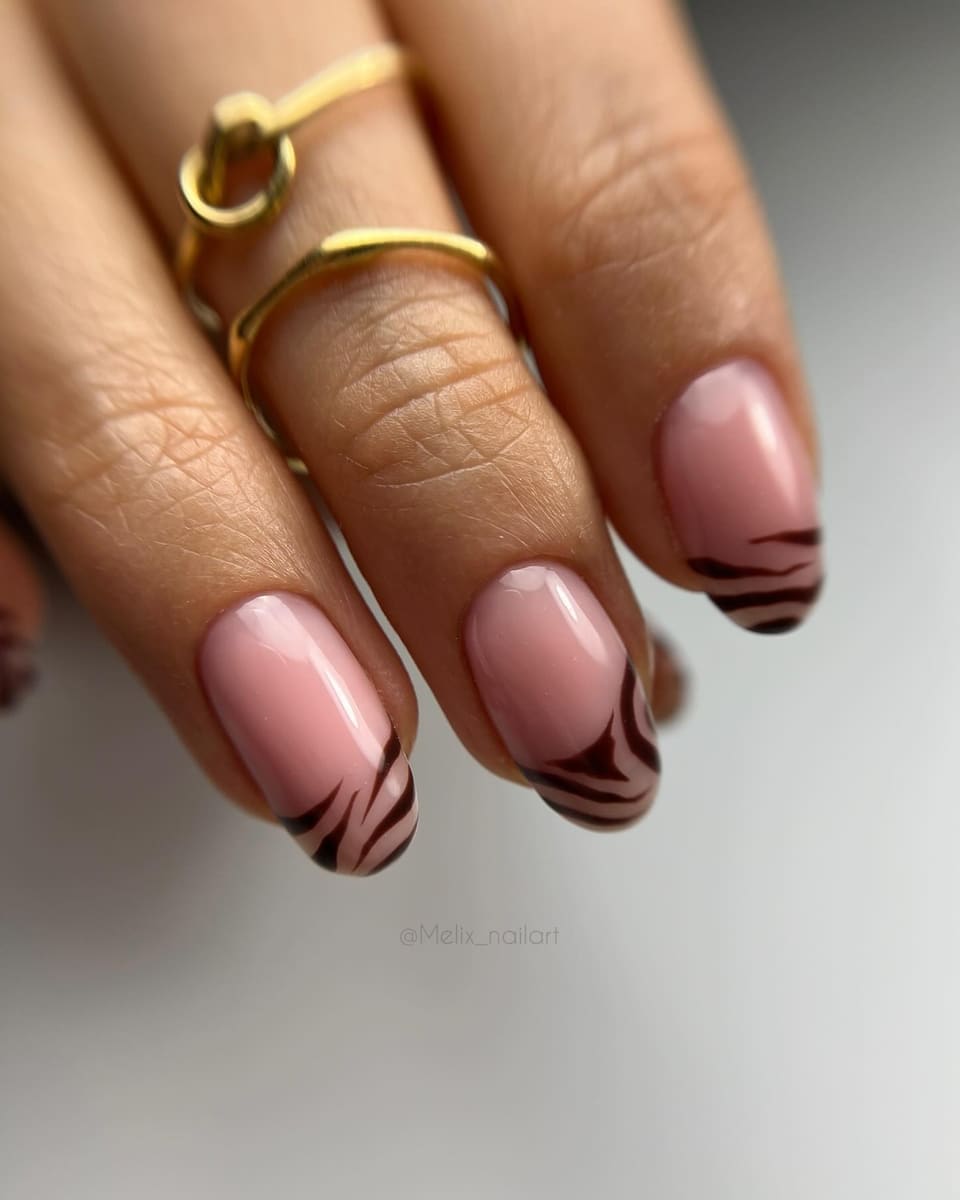
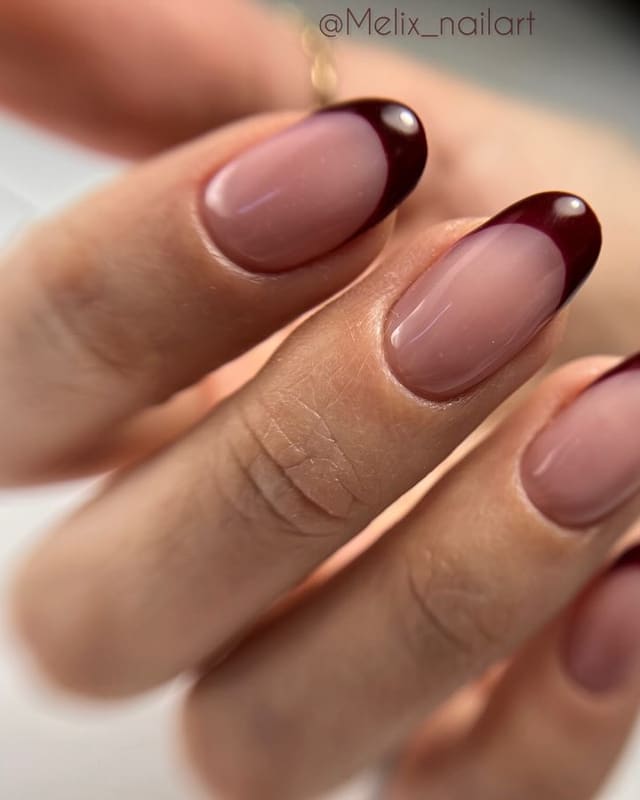
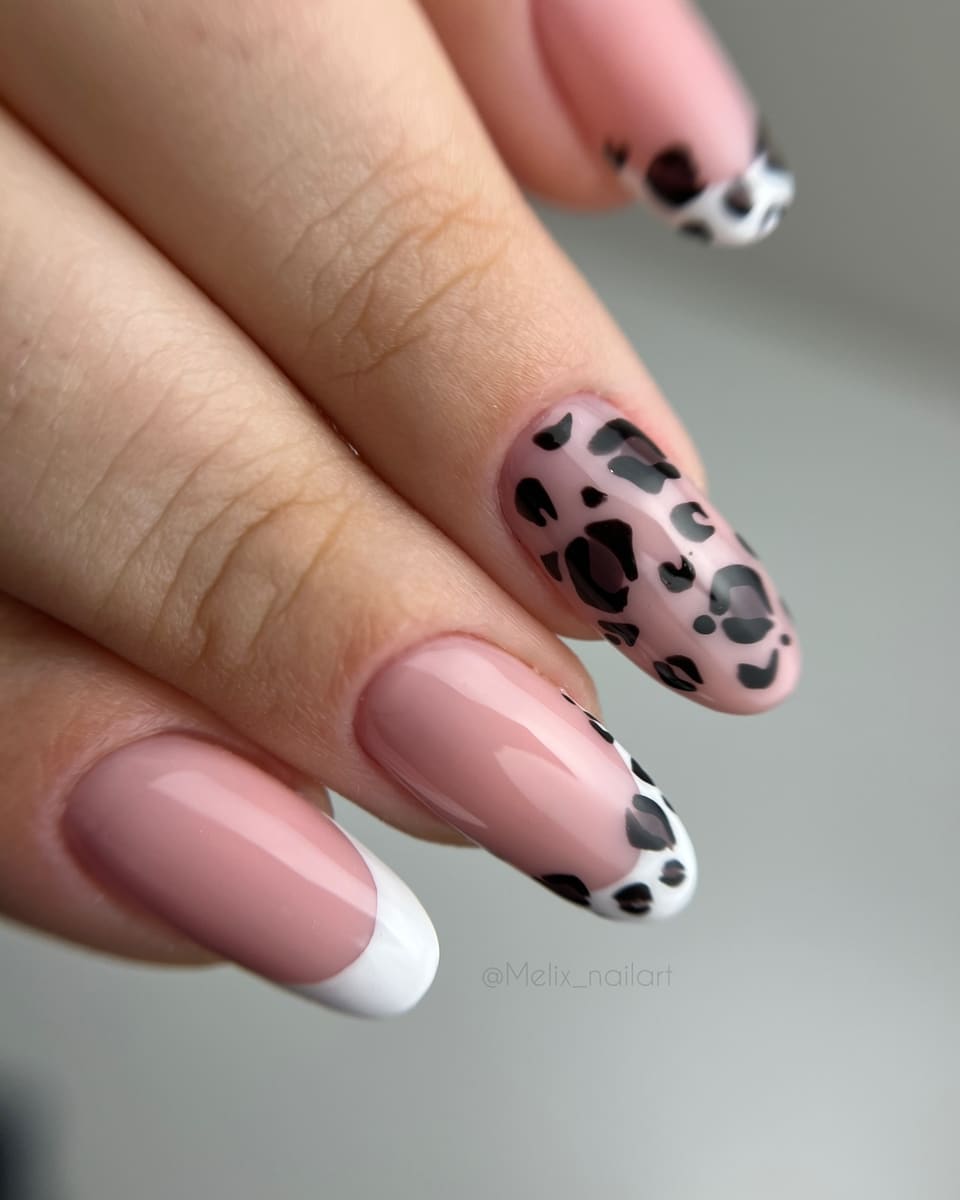
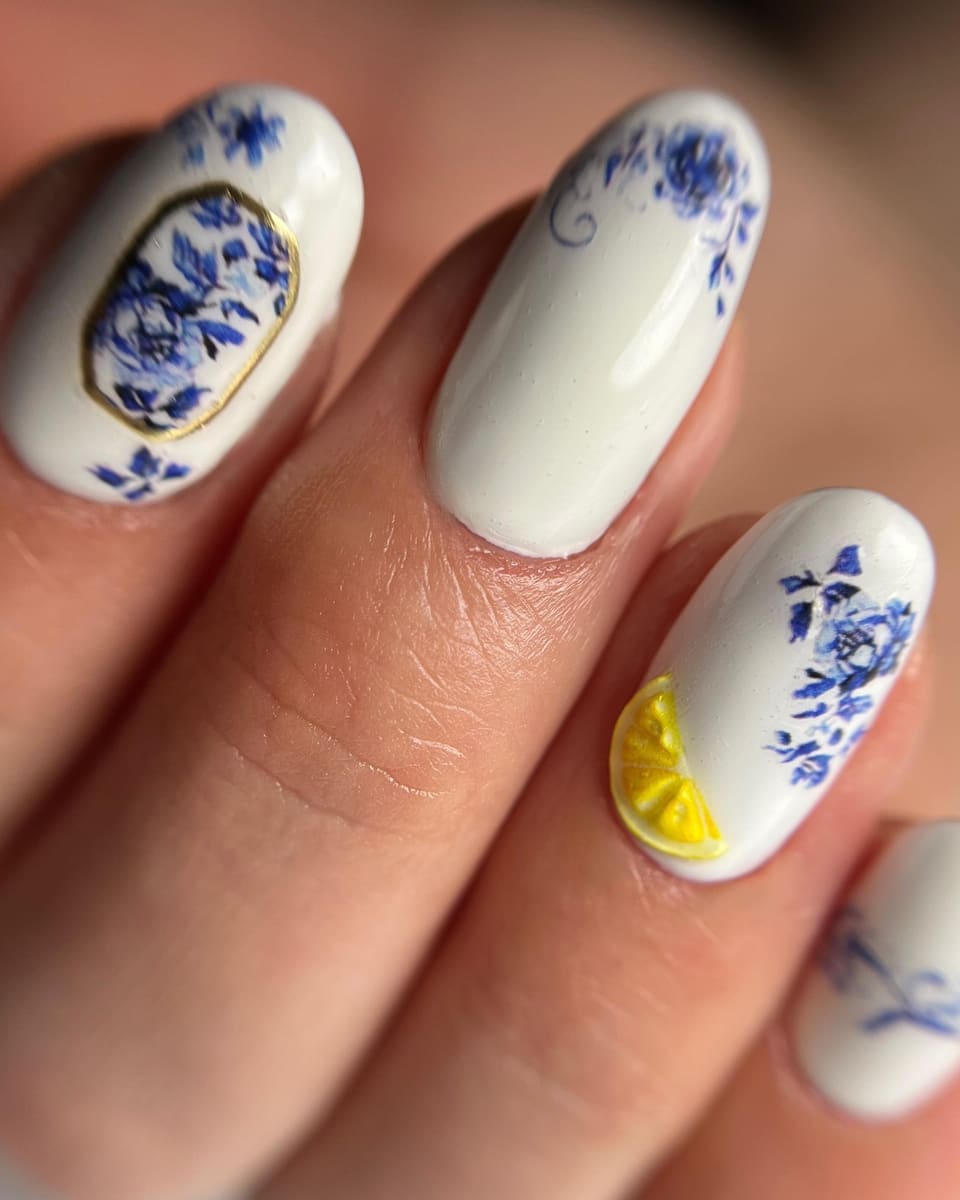
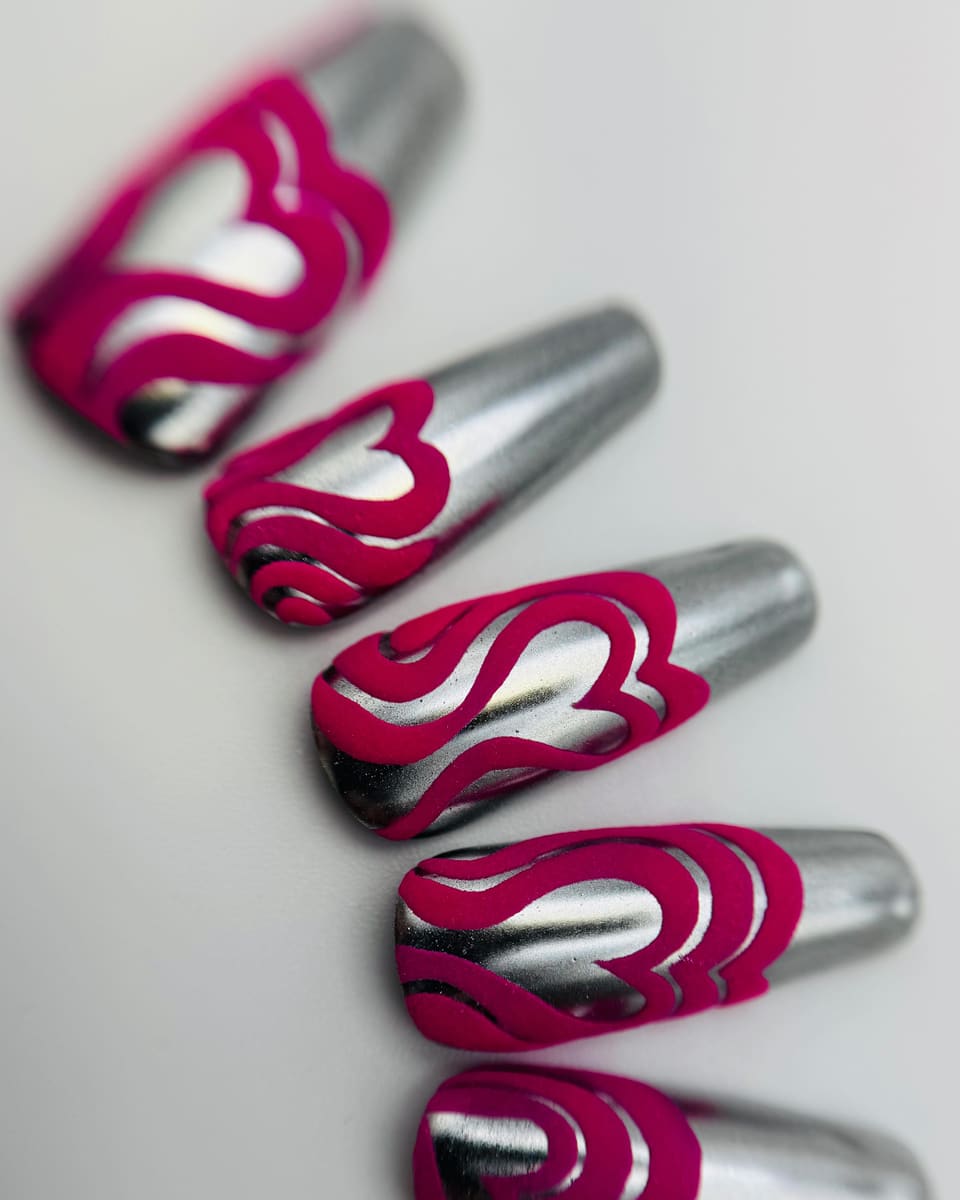
Every set Melina makes begins with this prep, whether it ends in a sheer nude or a sculpted bow.






Questions about Russian manicure
What is the difference between a Russian manicure and a regular gel manicure?
The prep. A regular manicure usually softens the skin in water and trims around the nail with nippers. A Russian manicure stays dry, and an electric file with fine bits lifts the non-living cuticle off the nail plate so gel color can sit close to the skin. The finish looks sharper up close, and the regrowth line stays tidier as your nails grow.
Does a Russian manicure hurt?
It shouldn't. You will feel a light vibration and some warmth from the file. Melina adjusts the bit, speed and pressure to your skin as she works, and if anything stings or feels hot, tell her and she stops and changes her approach. You shouldn't bleed, and your fingers shouldn't feel sore afterwards.
Is the e-file bad for my natural nails?
Used carefully, it shouldn't be. The known risks are over-thinning the nail plate (the sore red arcs near the cuticle that nail professionals call "rings of fire"), heat from a bit held too long in one spot, and injury to the skin around the nail. Melina files old product down rather than into your nail, keeps the bit moving at low speed near the cuticle, and never peels or pries gel off. The safety section covers both sides of the debate.
I'm allergic to gel. Can I still have a Russian manicure?
You can have the prep with no gel at all. The natural finish is cuticle work, shaping and oil, with no acrylate products. If you have reacted to gel before, with itching, redness or small bumps around the nails, avoid gel until a dermatologist has patch-tested you. Gel nail allergy, explained covers the signs and what a HEMA-free gel can and can't do.
Is the gel lamp safe for my skin?
Studies that measured nail lamps put the added skin-cancer risk as small, and the FDA has called curing lamps low risk when they are used as directed. They do give off UVA, so the American Academy of Dermatology recommends a broad-spectrum, water-resistant sunscreen of SPF 30 or higher, or dark fingerless gloves. You're welcome to do either. The research, in plain English.
What if my gel lifts?
Message Melina with a photo as soon as you notice it, and she will book a repair. Don't glue it down or pick at it. Water can collect under lifted gel, and moisture there is how a green bacterial discoloration can take hold, so lifting is worth fixing quickly.
How often should I book a Russian manicure?
Every three to four weeks suits most people. Fingernails grow about 3.5 millimeters a month, so by week three there is roughly 2.5 millimeters of bare nail at the cuticle. The American Academy of Dermatology suggests going without polish for a week or two now and then; a natural Russian manicure keeps your hands neat while your nails rest.
How should I prepare for my first appointment?
Come with clean, dry hands and skip hand cream and cuticle oil that day. If you're wearing gel or extensions from another salon, say so in your request, so Melina books extra time to remove them gently. A screenshot of a set you love helps her plan the shape and color before you sit down.